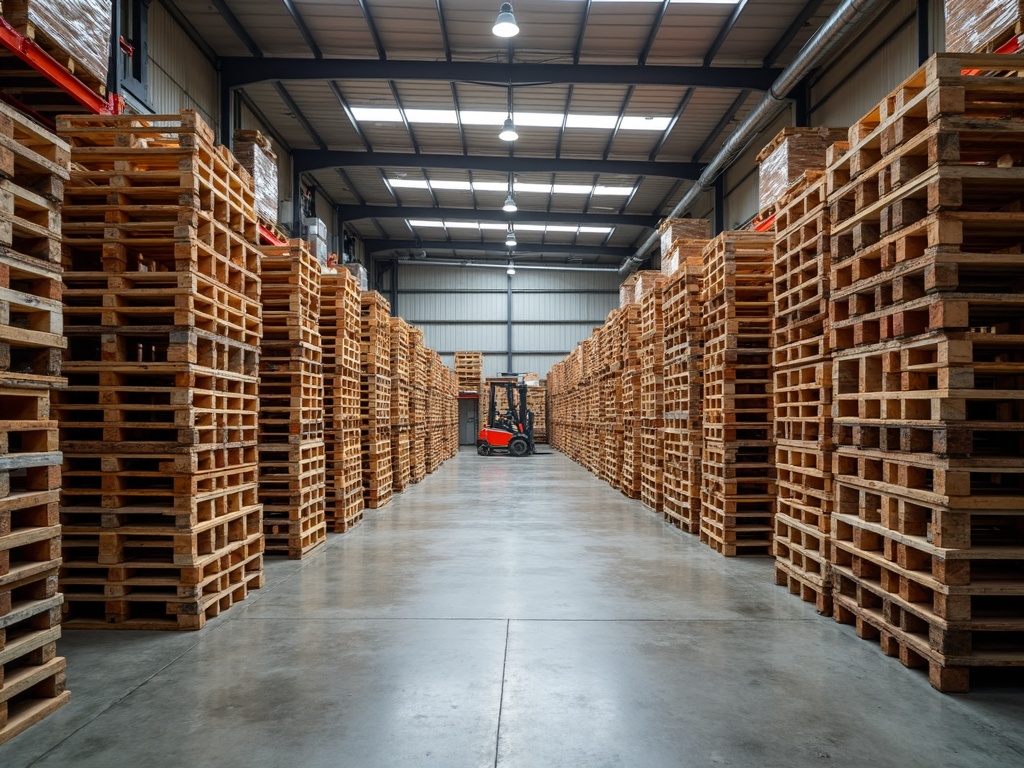
How to Optimize Your Warehouse Layout for Faster Order Fulfillment
Most fulfillment challenges are not due to employees or technology. They result from the floor plan that was established, and never really challenged again. Simple layout adjustments that do not necessitate constructing a new building or overhauling systems, can decrease picking times and minimize the daily friction that hampers every shift.
Start With ABC Analysis Before Moving a Single Shelf
The first thing you should do is not a physical task, as it’s about classifying your inventory based on how frequent the product moves through your warehouse.
ABC analysis divides your SKU catalog into three categories: A-grade items (your fastest movers), B-grade items (moderate velocity), and C-grade items (slow movers or seasonal items). Once you’ve sorted them like this, the principle couldn’t be simpler, the closer your A-grade items are to the shipping dock, the better.
Every unnecessary meter that a picker has to walk to get hold of a high-frequency product gets multiplied by the hundreds of picks they make in a day.
In a manual warehouse, it’s estimated that travel time can represent up to 50% of the total order picking time (State of Warehouse Logistics Report). This percentage could be the difference between making or missing that peak season shipping deadline.
Then, it’s not even about investing in new racking systems to bring your fast movers closer to your shipping stations. It’s just a case of looking at your pick data and finding the areas you could improve.
Build a Dedicated Fast-Pick Zone at Floor Level
After you’ve done the SKU profiling, the next step is to set up a distinct fast-pick zone, a section of floor-level racking set aside for your A-grade items in single unit quantities. Pickers don’t have to reach or climb or wait for equipment. They just walk in, get the item, and go.
The increased vertical tiers behind them then hold the bulk reserve stock and seasonal overstock. This is where all that vertical cube utilization pays off. You’re not adding square footage, you’re just using the height you already have more effectively. The primary trick is that those upper tiers are just to feed the fast-pick zone, not as primary pick locations themselves.
One thing that breaks this system quickly: honeycombing. When pallet positions are partially empty but can’t be filled with other products, you lose both space and pick efficiency. A regularly scheduled slot audit, even just a monthly review, keeps this from quietly degrading your layout over time.
Standardize Your Storage Units
Many warehouse managers tend to overlook non-standard pallets’ negative impact on efficiency. Varying pallet dimensions lead to wasted space on the racking, unpredictable forklift behavior, and weak points in loads which turn into safety hazards.
Implementing standardized unit loads means pallets sharing the same dimensions and weight capacities. In simpler terms, stack size can be accurately determined for every product in storage and in transit. It gives forklift drivers optimum visibility and load handling. You can safely set the heaviest load in your warehouse on any location and not worry about overloading the racking system.
For cash-strapped businesses, securing a reliable Used Pallet in Melbourne allows you to standardize affordably. A ‘like-new’ pallet that has been repaired to meet industry guidelines performs the same as a freshly minted pallet at a fraction of the cost. This is essential if you’re onboarding new stock that requires additional racking or your current pallets just aren’t cutting the mustard and need replacing. Or if you’ve simply outgrown your present capacity.
Create One-Way Traffic Flow For People and Machinery
Aisles where forklifts and pedestrians go in both ways are always bottlenecks and accidents waiting to happen. A forklift or pedestrian one-way travel path eliminates the need to stop and negotiate right-of-way at every intersection between a forklift and a pedestrian in a busy aisle.
Again, it’s not rocket science. The simple concept is the same as a supermarket floor: in one end, out the other, with no doubling-back. The pick path where forklifts and pedestrians separate works best. If your pickers are ever having to go backward to complete a single picking trip, you have given them the wrong travel path, not the other way around.
Paint the floor. Put up the signs. Train everyone to maintain the forklift or pedestrian directional travel path. The safety benefit is obvious, but the speed gain is just as real.
Audit Your Pallet Quality as Part of Your Regular Operations Review
A damaged pallet in a racking system poses a serious cost and liability risk to your operation. Load failures damage stock, safety incidents occur, and operational drag hits while you clean up the mess. Every warehouse manager knows the score, but pallet condition checks are easy to deprioritize until something directly goes wrong.
Make a quarterly pallet audit part of your standard operating procedures, and you’ll catch issues before they become too late. Any pallet showing cracked deck boards, broken blocks, or compromised stringers should be pulled from racking use immediately. The circular economy argument for solid, refurbished pallets is compelling, but remember: used pallets can be solid picks for a returnable program, but not all of them are right for racking.
Good pallets are the unseen infrastructure in your operation. They shoulder expensive product, occupy premium storage locations, and get handled every day by your lift truck drivers. Asking them to do that job reliably on the cheap is asking for trouble.
The fastest path to improved fulfillment isn’t a new WMS or a building expansion. It’s a close look at how your floor is organized, what you’re storing where, and determining whether the materials you’re using every day are actually fit for the job.